Root Canal treatment
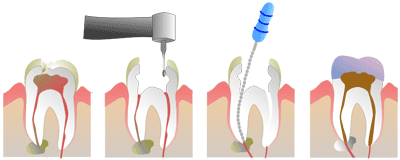
Aim :-The removal of the infected or irritated
nerve tissue that lies within the root of the tooth. It
is this infected pulp tissue that causes an eventual abscess
in the root apex region.
-
Step one :- The first
step in a root canal is to obtain access
to the nerve. This is accomplished by establishing
a small access opening in the top of the
tooth for a back tooth and palatal or lingual
side of the front upper and lower teeth
respectively. It usually will be done under
a local anesthetic.
-
Step two:- The length of the root
canal is determined and the infected pulp is removed.
A working length radiograph is normally taken which
gives a fairly accurate root length.
-
Step three:- The canal where the
nerve is located will be reshaped and bio-mechanically
prepared to accept a special root canal filling material.
The number of visits necessary to complete your root
canal will depend upon several factors including the
number of nerves in the tooth, the infected state of
the nerve, and the complexity of the procedure.
-
Final step :- in your root canal
will be the sealing of the root canal with a sterile,
plastic material called gutta percha. This is done in
order to prevent possible future infection.
If
treated early, root canal therapy need not be uncomfortable.
With the use of local anesthetics, the entire procedure
can be totally painless. The success rates for Root Canal
Therapy have been reported to be as high as 95%. Sometimes
when there has been long standing infection or abscess,
there may be some soreness associated with the root canal
visit. If this should turn out to be true, you will be given
specific instructions to follow to minimize the discomfort.
When an infection is present, it may be necessary
to take an antibiotic. If pain should be present, analgesics
may need to be prescribed. The tooth will then possibly
need a post and core and a crown in order to re-establish
normal form and function. This decision will be based upon
several additional factors.

|


